AI isn’t just for the big players anymore. Today, small businesses are tapping into its potential to save time, cut costs, and keep up with customer expectations. From streamlining daily operations to crafting smarter marketing strategies, the possibilities are growing. But how do small businesses make the leap without overspending or overcomplicating?
Small Businesses in the Age of AI: How to Use Technology for Growth, published by the London Post, examines how artificial intelligence (AI) tools are changing the way small businesses operate. From simplifying daily tasks to creating more tailored customer interactions, AI is no longer exclusive to large corporations. The piece emphasizes how small businesses can effectively manage marketing, customer service, and operations—often with limited resources—by adopting AI solutions. Whether it’s automating routine tasks like scheduling or using advanced data analytics to understand customer behavior, AI is helping entrepreneurs remain competitive and discover new opportunities.
The article looks into specific ways small businesses can utilize AI in marketing through customer segmentation, email customization, and ad optimization. Additionally, it outlines how AI-powered chatbots are managing customer service by providing round-the-clock support, answering common questions, and lightening operational loads. The potential benefits of AI cover automating tasks like inventory management, employee scheduling, and supply chain optimization, which, in turn, boosts productivity and lowers costs. The use of AI analytics to generate actionable insights also enables businesses to make smarter decisions, whether it’s about customer preferences or market trends.
For those creating products or services, AI enables new opportunities by identifying unfulfilled market demands and assisting in everything from prototyping to personalization. The article also recognizes that while there are clear advantages to adopting AI, small businesses may encounter challenges such as costs, integration issues, and data privacy concerns. However, with strategies like starting small and utilizing cloud-based, cost-effective solutions, these obstacles can be overcome.
Why This Matters
The inclusion of AI in small businesses has the ability to even the playing field. Tasks that once required either large teams or expensive resources are now accessible through AI-supported platforms. From simplifying data analysis to enhancing customer interactions, these tools are helping businesses save time and money while advancing creative solutions. The technology also allows businesses to anticipate trends or potential disruptions, helping them adapt more swiftly in competitive markets. Furthermore, the automation of repetitive tasks enables employees to focus on organizational priorities, contributing more to the company’s growth.
Benefits
- Higher efficiency and cost savings through automation of recurring processes.
- Better decision-making supported by real-time data analysis and insights.
- Improved customer experience through tailored interactions and faster support.
- More effective marketing strategies, enabling smaller budgets to target the right audiences accurately.
- Potential to develop new products or services designed around customer preferences.
Concerns
- The initial expense of AI tools might stretch the budgets of smaller businesses.
- Integration with current systems could pose challenges for business owners unfamiliar with the technology.
- Maintaining data privacy compliance is critical when implementing AI, particularly for customer-related systems.
Possible Business Use Cases
- A platform for small retailers to leverage AI for automated inventory and supply chain management tailored to seasonal demand patterns.
- An AI-powered marketing service that designs and refines advertising campaigns targeted specifically at local customer demographics.
- A customizable chatbot service for small businesses that integrates with their existing websites and provides tailored customer support.
AI is increasingly becoming a practical tool for businesses of all sizes, offering efficient answers to persistent challenges. By understanding its capabilities and constraints, small business owners can maximize this technology to attain steady growth. The focus should be on making thoughtful decisions—adopting tools that meet specific needs and gradually expanding their use. While barriers like costs and privacy concerns exist, they are manageable obstacles for entrepreneurs willing to test and refine their approach. As more small businesses integrate AI, the technology’s advantages are likely to spread, making industries more agile and responsive to change. For those ready to harness these opportunities thoughtfully, the potential for growth is significant.
—
You can read the original article here.
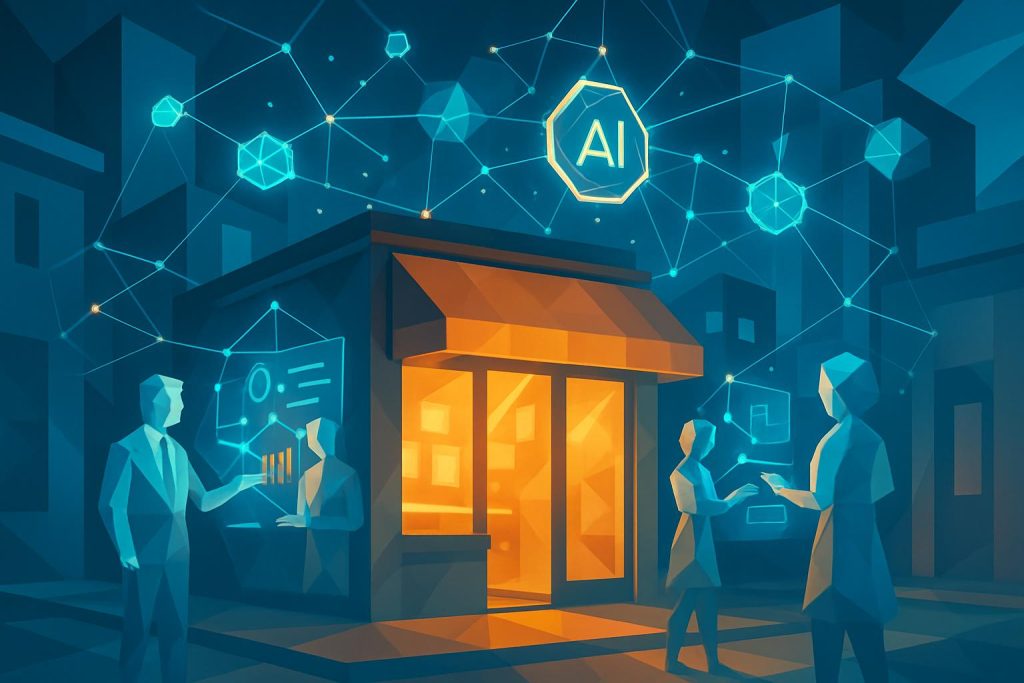
Image Credit:GPT Image 1 / Polygon Art. Make a custom style AI image HERE!
—
Want to get the RAIZOR Report with all the latest AI news, tools, and jobs? We even have a daily mini-podcast version for all the news in less than 5 minutes! You can subscribe here.
RAIZOR helps our clients cut costs, save time, and boost revenue with custom AI automations. Book an Exploration Call if you’d like to learn more about how we can help you grow your business.