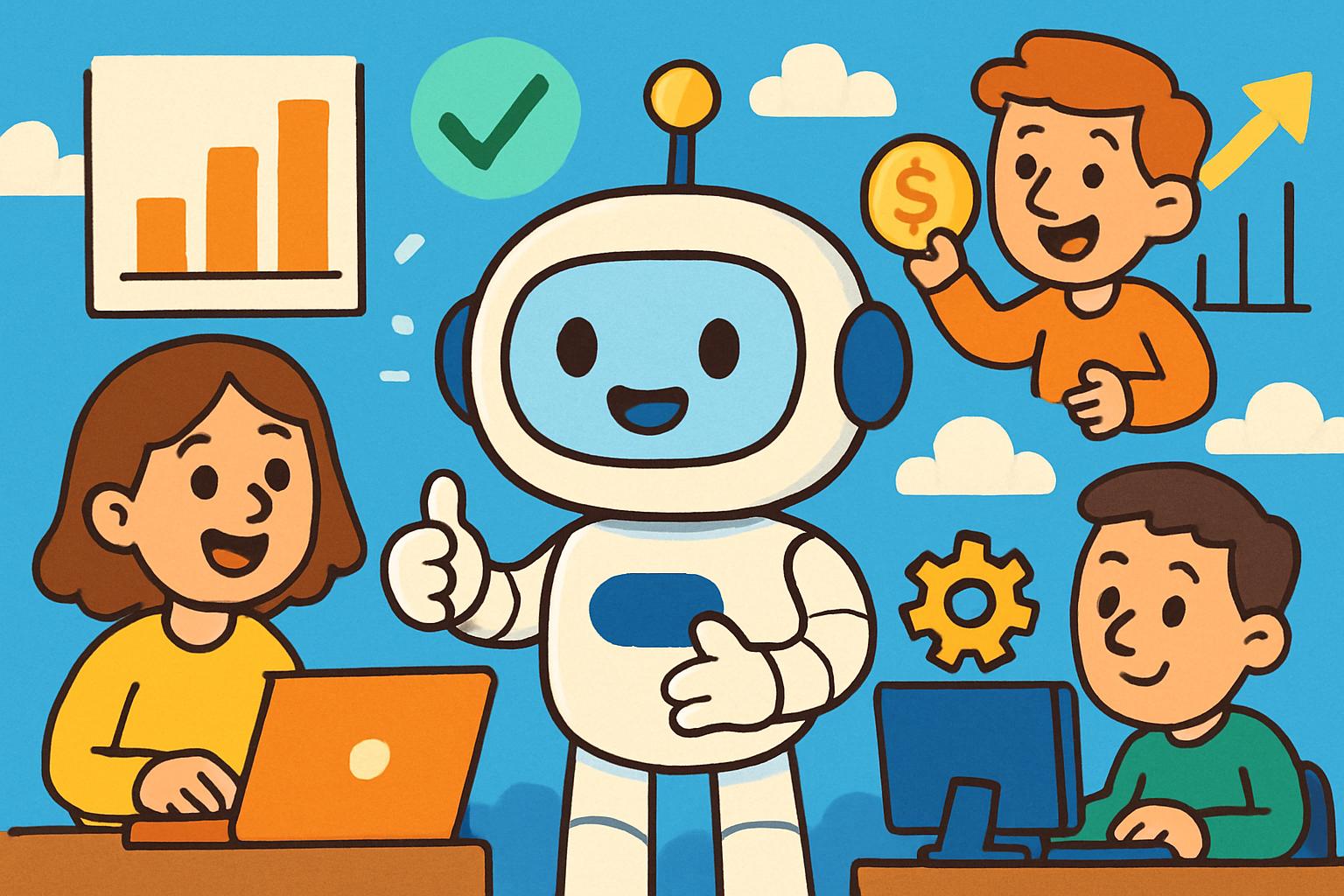
Businesses constantly look for ways to save time and improve decision-making. What if there were a way to tackle these challenges with systems that learn, adapt, and handle complex tasks more efficiently than ever? How do we balance the promise of smarter operations with the risks of increased autonomy?
Agentic AI systems ‘will provide enormous uplift in business performance’ explores the potential of a new kind of artificial intelligence that uses collaborative agents to tackle complex business tasks. Unlike single, general-purpose systems, agentic AI involves multiple specialized AI agents working together to improve productivity and decision-making across industries. Industry analyst Chris Ashley describes this concept as capable of delivering substantial improvements to business effectiveness, forecasting its impact within just a few years.
One prominent example is OpenAI’s ChatGPT agent, a new consumer-facing technology designed to handle multi-step tasks through its own reasoning. GlobalData analysis highlights that organizations are already transitioning from rigid, rule-based systems to flexible AI-driven agents. Applications include supply chain management, sales and operations planning, and customer-focused areas like quote pricing. By adopting these collaborative systems, businesses are reporting faster operations, better scalability, and more efficient use of resources.
Ashley notes the opportunities in manufacturing, where agentic AI is already gaining traction. For example, a process like preparing and responding to detailed quote requests, which used to take hours, can now be done in minutes. The extra time saved enables sales teams to focus on strategic growth rather than repetitive, time-intensive tasks. However, Ashley also highlights the risks tied to the autonomous nature of these systems, especially if businesses lack robust data governance practices or well-defined workflows.
Why It Matters
This shift in artificial intelligence technology represents a key advancement for businesses and industries looking to address more intricate problems. Unlike traditional software systems bound by static rules, agentic AI adapts and learns, aiming for smarter operations. By significantly reducing task execution times, these systems pave the way for increased innovation and efficiency. At the same time, their flexibility means industries as varied as retail, manufacturing, and logistics can all gain advantages. The ability of AI to handle complex reasoning and adjust workflows could redefine how businesses function day-to-day.
Benefits
The potential benefits are both practical and scalable. Agentic AI has already shown faster decision-making and task completion, allowing businesses to respond to changing conditions more effectively. It also enables human employees to focus on creative and relationship-driven work, freeing them from routine data analysis or repetitive tasks. Additionally, the efficiencies gained can result in lower costs and improved operational capacity, giving organizations an edge in their markets.
Concerns
The increased autonomy of these systems raises valid concerns about reliability and control, especially when processes or data structures are inadequately managed. Without strong governance practices in place, businesses could encounter risks like errors, inefficiencies, or even unintended decisions by an AI agent. Monitoring and managing these systems effectively will need to become a priority, ensuring they align with the goals and standards of the organizations deploying them.
Possible Business Use Cases
- A cloud-based platform for small retailers to automate complex inventory management, using agentic AI to predict demand and optimize stock levels.
- A specialized tool for manufacturers to streamline and expedite their quote generation processes, turning raw customer requests into actionable responses in minutes.
- An AI-driven solution for logistics companies to handle real-time delivery planning, adapting instantly to traffic patterns and delivery constraints.
The development of agentic AI reflects a shift in how businesses can manage complexity and scale. It combines flexibility with speed, offering practical solutions to long-standing inefficiencies. But the same qualities that make agentic systems impactful also introduce new challenges. Establishing robust governance, clear processes, and strong oversight will be essential to ensure these tools achieve their potential while minimizing risks. With the right approach, this technology could lead to smarter, more efficient business operations without compromising human oversight along the way.
—
You can read the original article here.
Image Credit: GPT Image 1 / Cybernetic.
Make your own custom style AI image with lots of cool settings!
—
Want to get the RAIZOR Report with all the latest AI news, tools, and jobs? We even have a daily mini-podcast version for all the news in less than 5 minutes! You can subscribe here.
RAIZOR helps our clients cut costs, save time, and boost revenue with custom AI automations. Book an Exploration Call if you’d like to learn more about how we can help you grow your business.